
Echeveria Plants
Echeveria is a popular genus of ornamental succulent plants known for its attractive rosette-shaped foliage, wide range of colours, and relatively low water requirements. Khizra Nursery offers Echeveria plants for sale for indoor spaces, patios, balconies, containers, succulent collections, rock gardens, and decorative landscaping.
Echeveria belongs to the Crassulaceae family and includes numerous species, hybrids, and cultivated varieties. Different Echeveria plants vary in leaf shape, size, colour, and growth habit, giving customers a wide selection of attractive succulents for homes and landscapes.
Echeveria Plant Characteristics
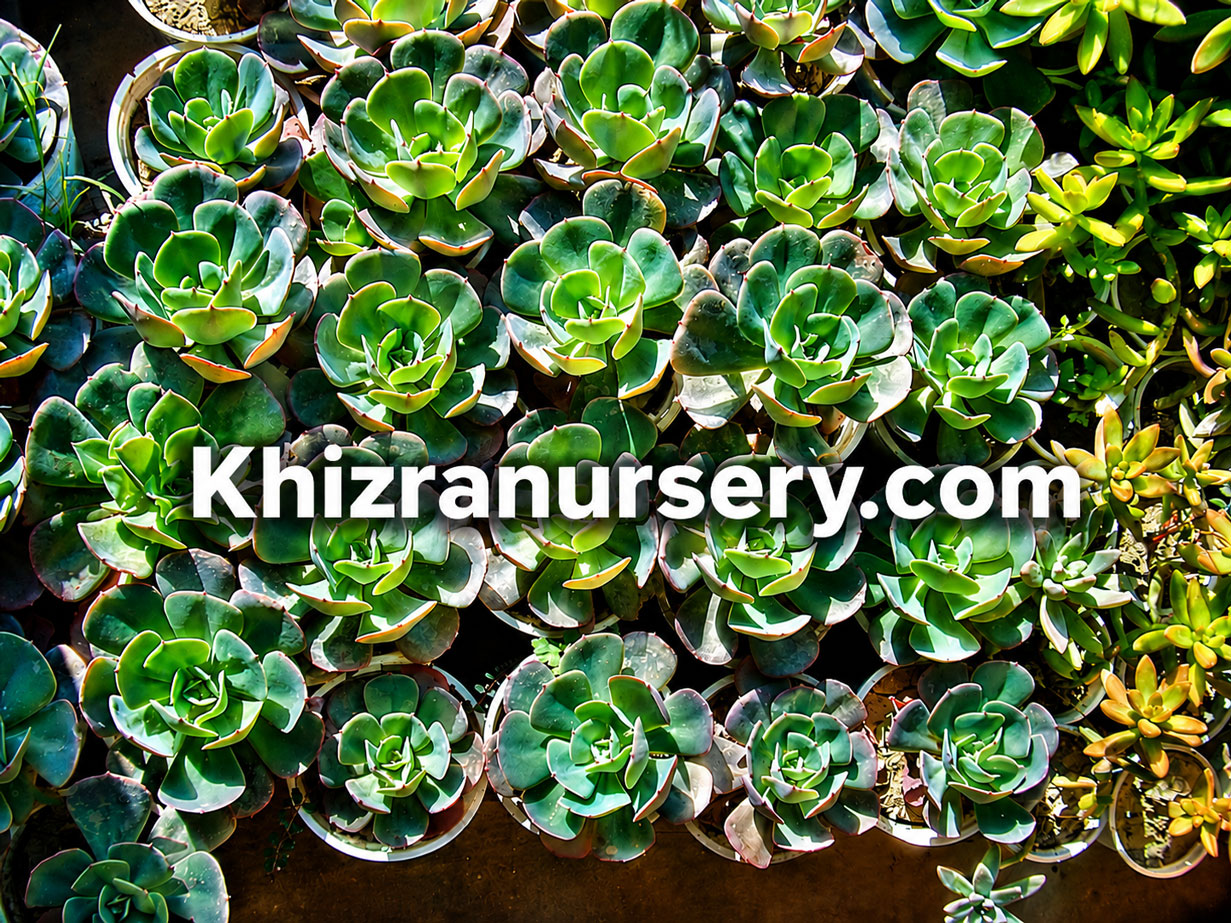
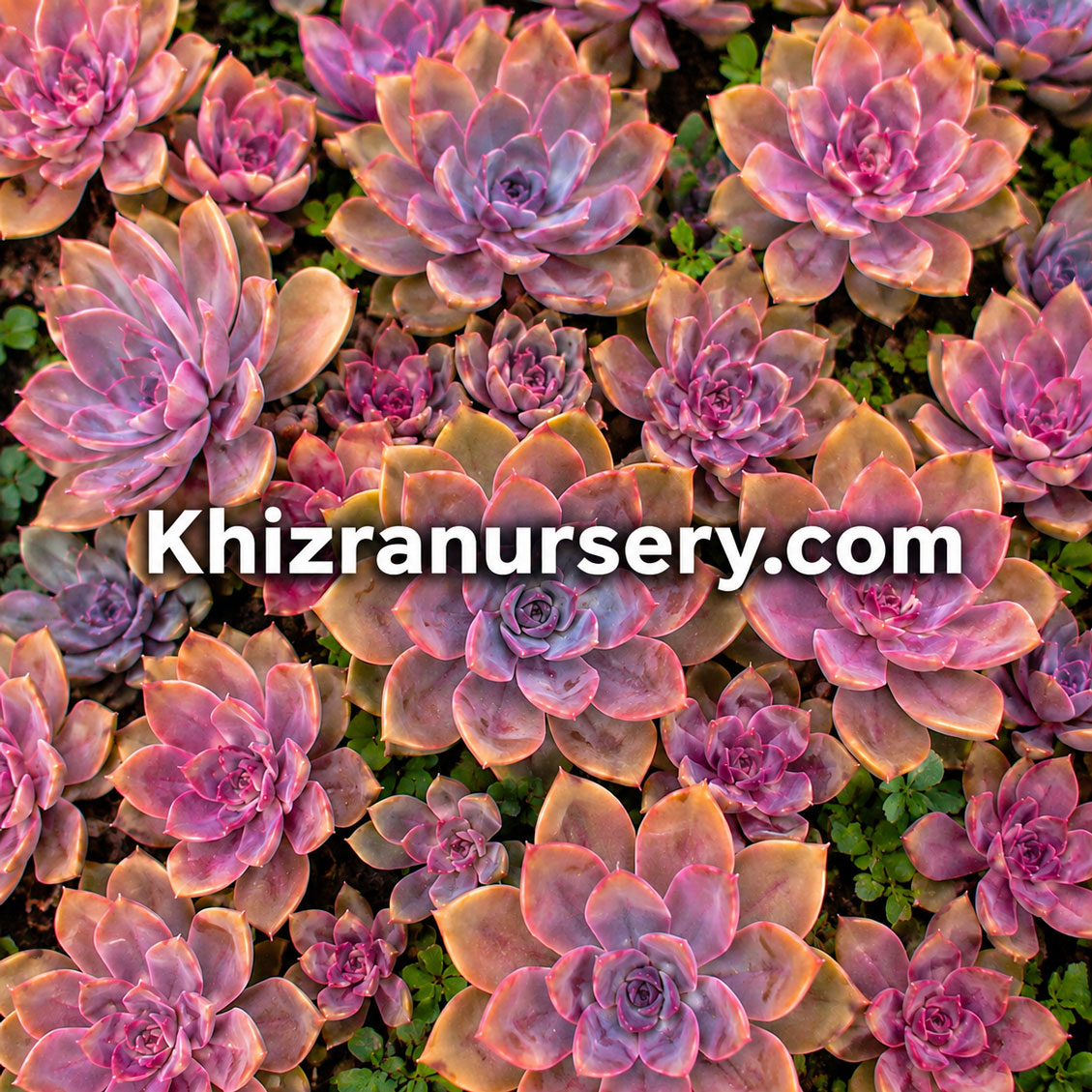
One of the main features of Echeveria plants is their distinctive rosette formation. The thick, fleshy leaves are arranged in compact or open rosettes and may appear in shades of green, blue, grey, silver, pink, purple, orange, or red.
Many varieties develop colourful leaf margins or change colour depending on sunlight, temperature, and growing conditions. Some Echeveria plants have smooth leaves with a natural powdery or waxy coating, while others may have a soft or slightly hairy texture.
Depending on the species or variety, mature Echeveria plants can produce flowering stems carrying clusters of bell-shaped flowers in shades of yellow, orange, pink, or red.
Echeveria Plants for Indoor and Outdoor Growing
Echeveria plants are suitable for containers and can be grown indoors when provided with sufficient bright light. They are also excellent choices for balconies, patios, terraces, succulent gardens, rock gardens, and other decorative outdoor spaces.
For indoor growing, place Echeveria in a bright location where it receives plenty of natural light. Insufficient light may cause the plant to stretch, resulting in elongated growth and wider spacing between leaves.
In suitable climates, Echeveria can also be grown outdoors in well-drained locations. Most varieties prefer protection from prolonged frost and excessive rainfall.
Growing Echeveria Plants
Echeveria grows best in bright light to full sun, depending on the species and local climate. Gradually acclimate plants when moving them into stronger direct sunlight.
A well-drained succulent or cactus potting mix is important for healthy growth. Because Echeveria stores water in its fleshy leaves, constantly wet soil can lead to root problems.
Water the plant thoroughly when required and allow the growing medium to dry before watering again. Water requirements may vary according to temperature, sunlight, pot size, season, and local humidity.
Echeveria Plant Care
Echeveria plants are generally easy to maintain when grown in the right conditions.
- Light: Bright light to full sun
- Soil: Well-drained succulent or cactus mix
- Water: Moderate to low; allow the soil to dry between watering
- Drainage: Excellent drainage is essential
- Drought Tolerance: High once established
- Frost Tolerance: Most varieties require protection from severe or prolonged frost
- Containers: Use pots with drainage holes
- Maintenance: Remove dried leaves and spent flower stems when required
Avoid overwatering, particularly during periods of slow growth or cooler weather.
Uses of Echeveria Plants
Echeveria plants are widely used for decorative planting and succulent collections. Their compact growth and wide range of foliage colours make them suitable for individual pots as well as mixed succulent arrangements.
They can be used for:
- Indoor plant collections
- Home and office decoration
- Decorative pots and containers
- Patios and balconies
- Succulent gardens
- Rock gardens
- Terrace landscaping
- Mixed succulent arrangements
- Low-water landscapes
- Ornamental displays
Echeveria Varieties and Colours
Echeveria includes many species, hybrids, and cultivated varieties. This diversity means that the plants available may differ in rosette size, leaf shape, colour, and overall appearance.
Some varieties have compact green or blue-grey rosettes, while others develop pink, purple, red, or orange tones. The natural powdery coating found on many varieties can also give the foliage an attractive silvery appearance.
Because of this variation, Echeveria plants are especially popular among succulent collectors and customers looking for ornamental plants with distinctive foliage.
Propagation of Echeveria
Many Echeveria plants can be propagated through offsets, leaf cuttings, or stem cuttings, depending on the species or variety.
Healthy offsets can be separated and planted individually. Some varieties can also produce new plants from leaves when propagated under suitable conditions. Propagation success depends on the type of Echeveria and proper growing conditions.
Buy Echeveria Plants
Khizra Nursery supplies Echeveria plants for sale in different sizes for homes, offices, nurseries, landscaping projects, and succulent collections. These attractive, drought-tolerant plants are suitable for customers looking for low-maintenance ornamental plants with colourful and distinctive foliage.
For larger requirements, Echeveria plants can also be supplied for landscaping, decorative planting, and commercial projects.
Item Details
| Attribute | Details |
|---|---|
| Botanical Name | Echeveria |
| Family | Crassulaceae |
| Plant Type | Evergreen Succulent |
| Growth Habit | Rosette-Forming |
| Foliage | Thick, Fleshy Leaves |
| Leaf Colours | Green, Blue, Grey, Silver, Pink, Purple, Orange and Red |
| Light Requirement | Bright Light to Full Sun |
| Water Requirement | Low to Moderate |
| Drought Tolerance | High |
| Soil Requirement | Well-Drained Succulent or Cactus Mix |
| Suitable Uses | Indoor Plants, Containers, Succulent Gardens, Rock Gardens and Landscaping |
Frequently Asked Questions
Are Echeveria plants good for indoors?
Yes. Echeveria can be grown indoors when placed in a bright location with sufficient natural light and planted in a well-drained growing medium.
How often should Echeveria be watered?
Allow the soil to dry before watering again. The exact watering frequency depends on temperature, sunlight, pot size, season, and growing conditions.
Do Echeveria plants need full sun?
Most Echeveria plants grow well in bright light and can tolerate direct sun when properly acclimated. Light requirements may vary between species and varieties.
Why is my Echeveria becoming tall and stretched?
Stretching usually occurs when the plant does not receive sufficient light. Moving it gradually to a brighter location can help encourage more compact growth.
Are Echeveria plants drought tolerant?
Yes. Echeveria stores water in its thick, fleshy leaves and is generally drought tolerant once established.
Can Echeveria be grown in pots?
Yes. Echeveria is highly suitable for pots and containers. Use a container with drainage holes and a well-drained succulent potting mix.
Do Echeveria plants produce flowers?
Yes. Depending on the species or variety and growing conditions, Echeveria can produce flowering stems with clusters of colourful bell-shaped flowers.

Reviews
There are no reviews yet.