
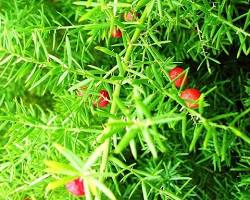
Asparagus falcatus Seeds for Sale
Asparagus falcatus seeds are used to grow a vigorous evergreen plant commonly known as Sicklethorn or Sickle-shaped Asparagus. This attractive species is valued for its long, arching stems, dense green foliage, and ability to develop into a substantial ornamental plant under warm growing conditions.
At Khizra Nursery, Asparagus falcatus seeds are available for sale for gardeners, nurseries, landscapers, plant collectors, and growers interested in establishing this distinctive asparagus species from seed.
About Asparagus falcatus
Asparagus falcatus belongs to the family Asparagaceae. It is a perennial, evergreen species that naturally occurs in parts of tropical and southern Africa and has become popular as an ornamental plant in suitable warm climates.
Unlike edible asparagus grown primarily for its shoots, Asparagus falcatus is mainly cultivated as an ornamental foliage plant.
The plant can produce long, climbing or arching stems and dense green growth. With adequate support, it can develop into an attractive climbing or scrambling plant.
Asparagus falcatus Common Names
Asparagus falcatus is known by several common names, including:
- Sicklethorn
- Sickle-shaped Asparagus
- Large-leaved Asparagus
- Asparagus Fern
Common names can vary by region, so Asparagus falcatus is the preferred name for accurate identification.
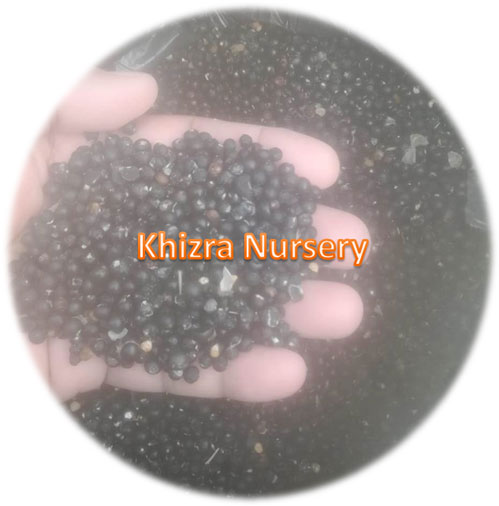
Asparagus falcatus Seeds
Growing Asparagus falcatus from seed is a useful way to produce new plants for gardens, containers, landscaping, and nursery production.
The seeds develop inside small berries produced by mature plants. When starting plants from seed, use viable seeds and provide warm conditions, consistent moisture, and a well-draining growing medium.
Seed germination may vary according to seed freshness, temperature, moisture, and growing conditions.
How to Germinate Asparagus falcatus Seeds
1. Prepare the Seeds
If the seeds have a hard outer covering, soaking them in clean water before sowing can help soften the seed coat.
Use fresh, viable seeds whenever possible.
2. Prepare the Growing Medium
Use a loose, well-draining seed-starting medium.
A mixture containing fertile soil and organic matter with good drainage is suitable for young seedlings. Avoid heavy soil that remains saturated after watering.
3. Sow the Seeds
Sow the seeds at a shallow depth and cover them lightly with growing medium.
Water gently after sowing to settle the medium around the seeds.
4. Maintain Warmth and Moisture
Keep the seed tray or container in a warm location. Maintain consistent moisture without making the growing medium waterlogged.
Warm conditions can support successful germination and early seedling development.
5. Transplant Seedlings
Once seedlings are established and have developed several healthy leaves, they can be transplanted into individual containers.
Handle young roots carefully during transplantation.
Asparagus falcatus Growing Conditions
Asparagus falcatus grows well in warm, frost-free conditions.
It can tolerate bright light and, once established, can adapt to different light conditions depending on the climate. In very hot areas, some protection from intense afternoon sun can help young plants.
The plant benefits from adequate moisture during active growth but should not be kept in continuously waterlogged soil.
Soil Requirements
Asparagus falcatus performs well in fertile, well-drained soil.
A good growing medium should retain enough moisture for healthy growth while allowing excess water to drain freely.
For container cultivation, use a porous potting mix and a container with adequate drainage holes.
Light Requirements
Asparagus falcatus can grow in full sun to partial shade, depending on climate and growing conditions.
In cooler or moderately warm environments, more sunlight can encourage vigorous growth. In very hot climates, partial shade can help protect foliage from excessive heat and sun exposure.
Watering Requirements
Water young plants regularly while they are establishing their root systems.
Once established, Asparagus falcatus can tolerate short periods of reduced watering, although consistent moisture during active growth generally produces better foliage development.
Avoid overwatering. Good drainage is important for maintaining healthy roots.
Asparagus falcatus Growth Habit
Asparagus falcatus develops long, arching or climbing stems and can become a vigorous plant when grown under favorable conditions.
It may scramble through nearby vegetation or use available structures for support. Providing a trellis, fence, or other suitable support can help guide its growth in a garden or landscape.
Regular pruning can be used to remove old or unwanted stems and maintain the desired shape.
Uses of Asparagus falcatus
Asparagus falcatus is primarily grown as an ornamental foliage plant.
It can be used for:
- Garden landscaping
- Fences and trellises
- Vertical planting
- Large containers
- Tropical and subtropical gardens
- Landscape borders
- Screening
- Green walls
- Nursery production
- Ornamental plant collections
Its long stems and dense foliage make it useful where a vigorous green ornamental plant is desired.
Asparagus falcatus for Landscaping
Asparagus falcatus can provide dense green growth in warm-climate landscapes.
It is particularly useful around fences, trellises, walls, and other structures where its climbing or arching stems can be supported.
Because it can become vigorous, provide adequate space and manage the plant through pruning when necessary.
Growing Asparagus falcatus in Containers
Young Asparagus falcatus plants can be successfully grown in containers.
Choose a container with good drainage and use a well-draining potting medium. As the plant grows, move it into a larger container when the roots become crowded.
Container-grown plants can be placed on patios, balconies, terraces, or other suitable areas with adequate light.
Propagation from Seed
Seed propagation allows growers to produce new Asparagus falcatus plants from viable seeds.
For nursery production, seeds can be started in trays or small containers and maintained under controlled conditions until the seedlings are sufficiently developed for transplantation.
Good sanitation, proper drainage, moderate watering, and suitable temperatures can help reduce problems during the early growth stage.
Asparagus falcatus vs. Other Asparagus Ferns
The name Asparagus Fern is used for several ornamental species within the genus Asparagus. This can cause confusion when purchasing seeds or plants.
Asparagus falcatus is different from species such as Asparagus densiflorus, which includes commonly cultivated forms such as Sprengeri Fern.
For accurate identification, the botanical name Asparagus falcatus should be used rather than relying only on the common name “Asparagus Fern.”
Frequently Asked Questions
What are Asparagus falcatus seeds?
Asparagus falcatus seeds are used to grow the ornamental species Asparagus falcatus, a vigorous evergreen plant with long, arching stems and dense green foliage.
What is the common name of Asparagus falcatus?
Asparagus falcatus is commonly known as Sicklethorn or Sickle-shaped Asparagus. It may also be called an Asparagus Fern in some regions.
How do you germinate Asparagus falcatus seeds?
Sow the seeds in a well-draining growing medium, maintain warm conditions, and keep the medium consistently moist without waterlogging it. Soaking the seeds before sowing may help soften the seed covering.
Does Asparagus falcatus grow in full sun?
Yes. Asparagus falcatus can grow in full sun to partial shade. In very hot climates, partial shade can help protect young plants from excessive heat.
Can Asparagus falcatus be grown in containers?
Yes. Young Asparagus falcatus plants can be grown in containers provided they have sufficient space, good drainage, and suitable light.
Is Asparagus falcatus an ornamental plant?
Yes. It is primarily cultivated as an ornamental foliage plant rather than as a vegetable crop.
Is Asparagus falcatus the same as Asparagus densiflorus?
No. Asparagus falcatus and Asparagus densiflorus are different species, although both can be referred to as Asparagus Ferns.
How large does Asparagus falcatus become?
The plant can become a vigorous, substantial climber or scrambling plant under favorable warm conditions. Its final size depends on climate, soil, support, and cultivation conditions.
Can Asparagus falcatus be used for screening?
Yes. Its dense green growth and vigorous stems can make it useful for ornamental screening when grown in a suitable location and managed appropriately.
Buy Asparagus falcatus Seeds
If you are looking for Asparagus falcatus seeds for sale, Khizra Nursery provides seeds for gardeners, nurseries, landscapers, collectors, and growers interested in this distinctive ornamental asparagus species.
With warm conditions, suitable light, well-drained soil, and consistent care during establishment, Asparagus falcatus can develop into an attractive evergreen foliage plant for gardens, containers, trellises, and landscape projects.

Reviews
There are no reviews yet.