
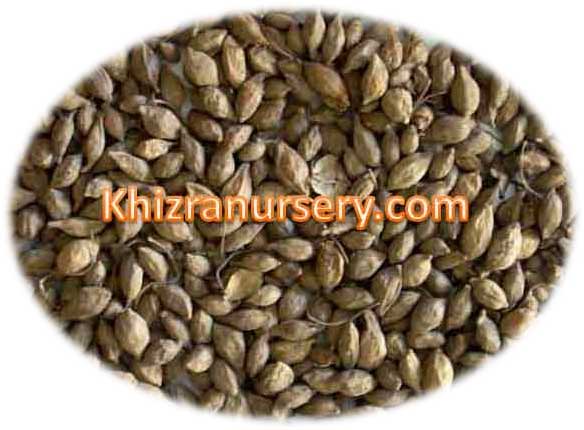
Terminalia catappa Seeds for Sale
Terminalia catappa Seeds are used to grow Terminalia catappa, a tropical tree commonly known as the Tropical Almond Tree, Indian Almond Tree, or Malabar Almond. This attractive tree is valued for its broad, spreading form, large leaves, tropical appearance, and almond-like fruits.
Khizra Nursery offers Terminalia catappa Seeds for Sale for gardeners, nurseries, landscapers, growers, plant collectors, and customers interested in growing Tropical Almond Trees from seed.
About Terminalia catappa
Terminalia catappa is a tropical tree belonging to the Combretaceae family. It is widely cultivated in tropical and subtropical regions as a landscape and shade tree.
The tree is particularly recognizable for its large, broad leaves, which are arranged in distinctive clusters toward the ends of its branches. Mature trees can develop a wide, spreading crown, making them suitable for spacious gardens, parks, roadsides, and tropical landscapes.
Terminalia catappa also produces fleshy fruits containing an almond-like seed, which is the source of the common name Tropical Almond.
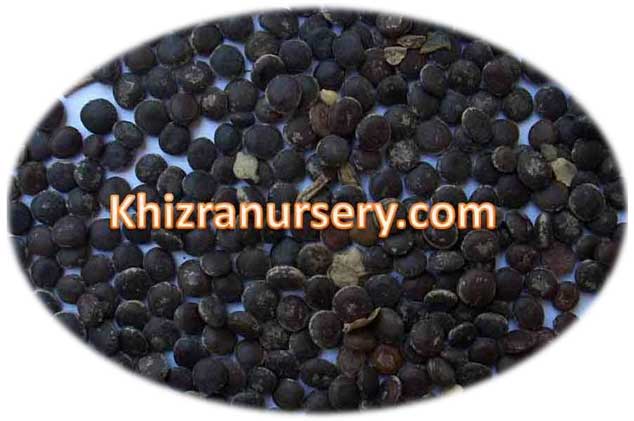
Terminalia catappa Seeds
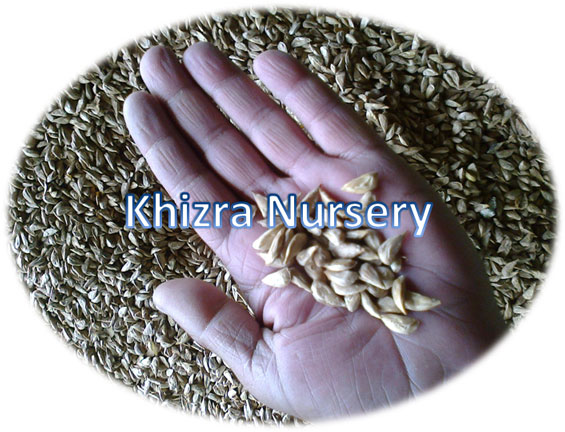
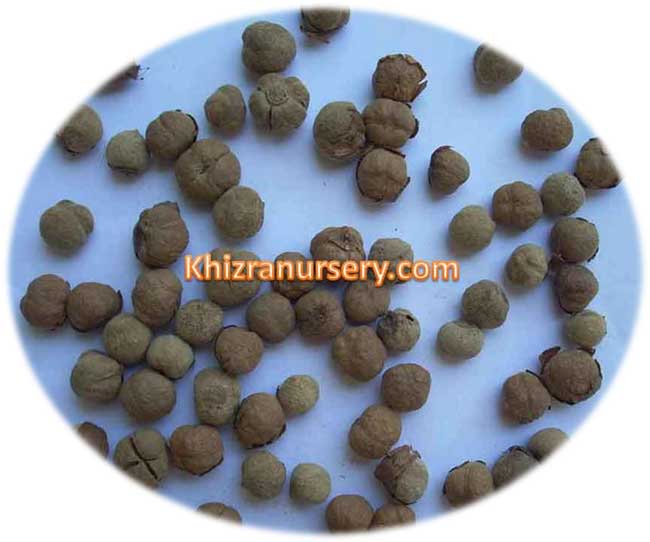
Terminalia catappa Seeds are the seeds of the Tropical Almond Tree and are commonly used for propagation.
Fresh, mature seeds can be sown in a suitable growing medium. Providing warmth, adequate moisture, good drainage, and sufficient sunlight can help support healthy germination and seedling development.
Germination time can vary depending on seed freshness, storage, growing temperature, moisture, soil conditions, and other environmental factors.
Tropical Almond Seeds
Tropical Almond Seeds are another common name for Terminalia catappa Seeds. The species is also called Indian Almond and Malabar Almond in different regions.
Using the botanical name Terminalia catappa is recommended when purchasing seeds because the genus Terminalia contains many different tree species.
If you specifically want to grow the Tropical Almond Tree, look for seeds identified as Terminalia catappa.
Growing Terminalia catappa from Seed
Growing Terminalia catappa from seed is relatively straightforward when suitable tropical growing conditions are provided.
1. Prepare the Seeds
Use mature, healthy seeds for propagation. Remove any remaining fruit material before sowing.
The seed should be handled carefully to avoid unnecessary damage.
2. Prepare the Growing Medium
Use a fertile, loose, and well-draining growing medium.
The soil should retain enough moisture for germination while allowing excess water to drain freely.
3. Sow the Seeds
Sow the Terminalia catappa Seeds in the prepared medium at a suitable depth and cover them lightly.
Keep the growing medium consistently moist without keeping it saturated.
4. Maintain Warm Conditions
Terminalia catappa is a tropical species, so warm conditions are beneficial for germination and early growth.
Protect young seedlings from cold temperatures.
5. Provide Sunlight
After germination, provide bright light and gradually acclimatize young seedlings to outdoor conditions.
As the plant becomes established, a sunny location can support vigorous growth.
6. Transplant the Seedlings
When the seedlings are sufficiently established, transplant them into larger containers or a suitable outdoor location.
Provide enough space for the tree to develop its broad canopy as it matures.
Terminalia catappa Tree Characteristics
The Terminalia catappa Tree is known for its distinctive tiered or spreading branching structure.
Its large leaves are broad and leathery and can develop attractive color changes before falling in some climates. The leaves are concentrated toward the ends of branches, giving the tree a characteristic tropical appearance.
The tree can become large when grown under favorable conditions, so sufficient space should be considered before planting.
Tropical Almond Tree
The Tropical Almond Tree is one of the most commonly used names for Terminalia catappa.
Other common names include:
- Tropical Almond
- Indian Almond
- Malabar Almond
- Sea Almond
- Country Almond
- Catappa
Although these common names are widely used, Terminalia catappa is the botanical name that provides the clearest identification.
Terminalia catappa Fruits
Terminalia catappa produces fleshy, almond-like fruits.
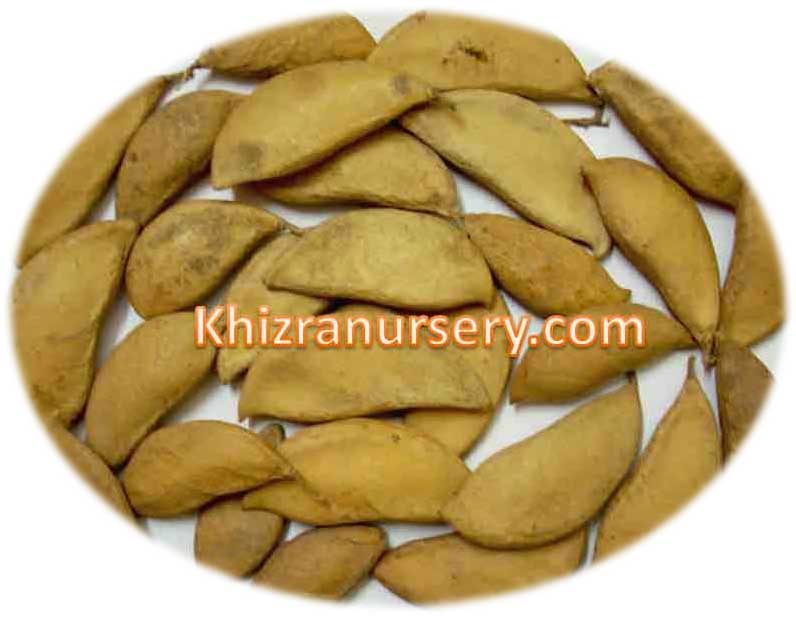
The fruit changes color as it matures and contains a hard inner structure surrounding the seed. The seed inside is commonly associated with the name Tropical Almond.
The fruits are one of the distinctive characteristics of this species and help distinguish it from many other Terminalia trees.
Soil Requirements
Terminalia catappa performs well in fertile, well-drained soil.
When growing young plants, use a growing medium that provides good drainage while retaining adequate moisture.
The tree can tolerate a range of soil conditions once established, but prolonged waterlogging should generally be avoided.
Watering Requirements
Young Terminalia catappa plants require regular watering during establishment.
Keep the soil adequately moist, particularly during warm or dry weather, but avoid excessive watering that leaves the roots continuously saturated.
Established trees can be more tolerant of periods of reduced rainfall, depending on local climate and soil conditions.
Sunlight Requirements
Terminalia catappa generally performs best in full sun.
A sunny planting location encourages healthy growth and development of the characteristic broad canopy.
Young plants should be monitored when moved from protected conditions into strong outdoor sunlight.
Climate Requirements
Terminalia catappa is primarily a tropical tree and grows well in warm climates.
It is suitable for tropical and warm subtropical regions. Young plants are more sensitive to cold temperatures than established trees, so protection may be necessary in cooler climates.
For successful cultivation, provide warmth, sunlight, adequate moisture, and sufficient growing space.
Uses of Terminalia catappa
Terminalia catappa is valued for several horticultural and landscape purposes.
It can be grown as:
- A tropical shade tree
- An ornamental tree
- A roadside tree in suitable climates
- A garden tree
- A park tree
- A coastal landscape tree
- A botanical or tropical collection specimen
The tree’s broad canopy makes it particularly useful where substantial shade and tropical visual appeal are desired.
Tropical Almond Tree for Landscaping
The Tropical Almond Tree can be an attractive choice for large gardens, parks, resorts, tropical landscapes, and other spacious planting areas.
Its broad leaves and spreading growth habit give it a distinctive appearance.
Because Terminalia catappa can become a large tree, select a planting location with sufficient room for the mature canopy and root system.
Terminalia catappa vs Other Terminalia Species
The genus Terminalia contains many different tree species. Therefore, it is important to use the complete botanical name when purchasing seeds.
Terminalia catappa is commonly known as the Tropical Almond, Indian Almond, or Malabar Almond.
It is different from other Terminalia species such as Terminalia bentzoe and Terminalia mantaly.
If you specifically want Tropical Almond Seeds, make sure the seeds are identified as Terminalia catappa rather than simply “Terminalia Seeds.”
Why Buy Terminalia catappa Seeds from Khizra Nursery?
Khizra Nursery offers Terminalia catappa Seeds for Sale for customers interested in growing Tropical Almond Trees from seed.
Our seeds are suitable for gardeners, nurseries, landscapers, growers, plant collectors, and customers looking for tropical tree seeds for cultivation.
For larger quantities, wholesale requirements, or commercial planting projects, contact Khizra Nursery regarding available quantities and supply options.
Order Terminalia catappa Seeds
If you are looking for Terminalia catappa Seeds, Tropical Almond Seeds, Indian Almond Seeds, or seeds for growing the Tropical Almond Tree, you can order from Khizra Nursery.
Select your required quantity and place your order through our website. Worldwide delivery and dropshipping are available for suitable orders, subject to destination-country shipping and import requirements.
Frequently Asked Questions
What is Terminalia catappa?
Terminalia catappa is a tropical tree in the Combretaceae family, commonly known as the Tropical Almond, Indian Almond, or Malabar Almond.
What are Terminalia catappa Seeds?
Terminalia catappa Seeds are the seeds used to grow the Tropical Almond Tree.
What is the common name of Terminalia catappa?
Common names include Tropical Almond, Indian Almond, Malabar Almond, Sea Almond, and Catappa.
Can Terminalia catappa be grown from seed?
Yes. Terminalia catappa can be propagated from seed under suitable warm, moist, and well-drained growing conditions.
What are Tropical Almond Seeds?
Tropical Almond Seeds are the seeds of Terminalia catappa, the tree commonly known as the Tropical Almond Tree.
Is Terminalia catappa the same as Terminalia mantaly?
No. Terminalia catappa and Terminalia mantaly are different species within the Terminalia genus.
Is Terminalia catappa a tropical tree?
Yes. Terminalia catappa is a tropical tree that performs best in warm climates with adequate sunlight.
How large can a Terminalia catappa Tree become?
Terminalia catappa can develop into a large tree with a broad, spreading canopy when grown under favorable conditions.
What type of soil does Terminalia catappa need?
It generally performs well in fertile, well-draining soil. Good drainage is particularly important for young plants.
Does Terminalia catappa produce fruit?
Yes. The tree produces fleshy, almond-like fruits containing the seed.
Botanical Information
Botanical Name: Terminalia catappa
Family: Combretaceae
Common Names: Tropical Almond, Indian Almond, Malabar Almond, Sea Almond, Catappa
Plant Type: Tropical Tree
Propagation: Seeds
Fruit: Fleshy almond-like fruit
Growing Conditions: Tropical and warm subtropical climates
Sunlight: Full Sun
Seed Type: Terminalia catappa Seeds / Tropical Almond Seeds
Note: Germination time and plant growth can vary depending on seed freshness, storage, temperature, soil, moisture, sunlight, climate, and other growing conditions.

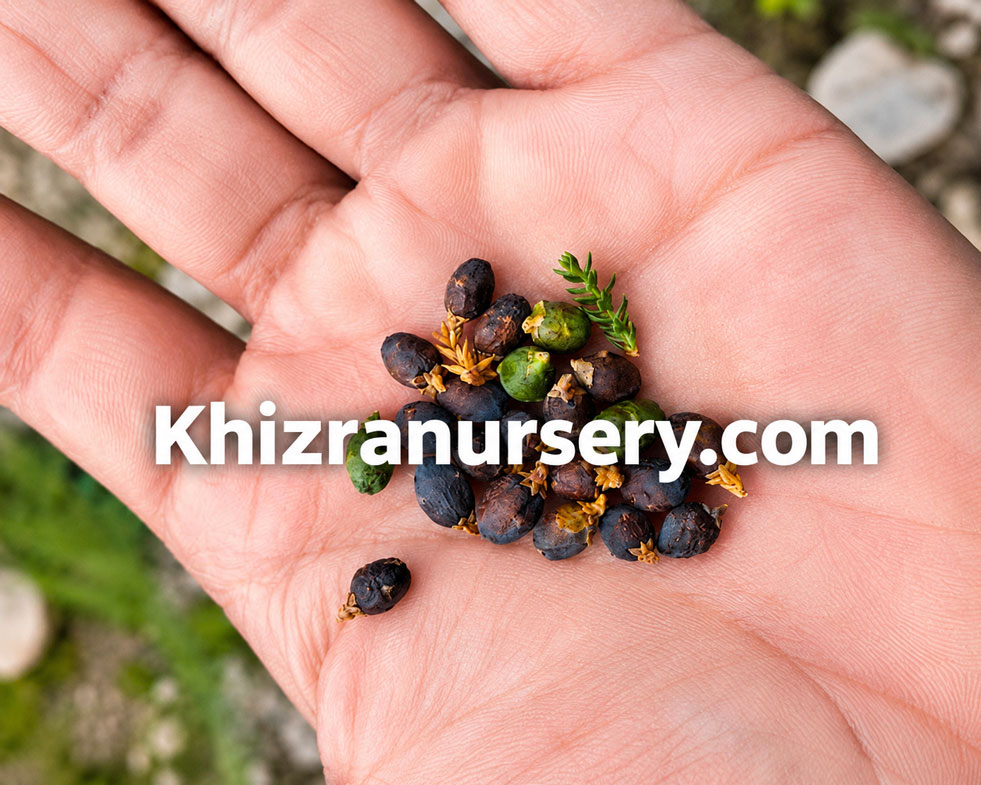


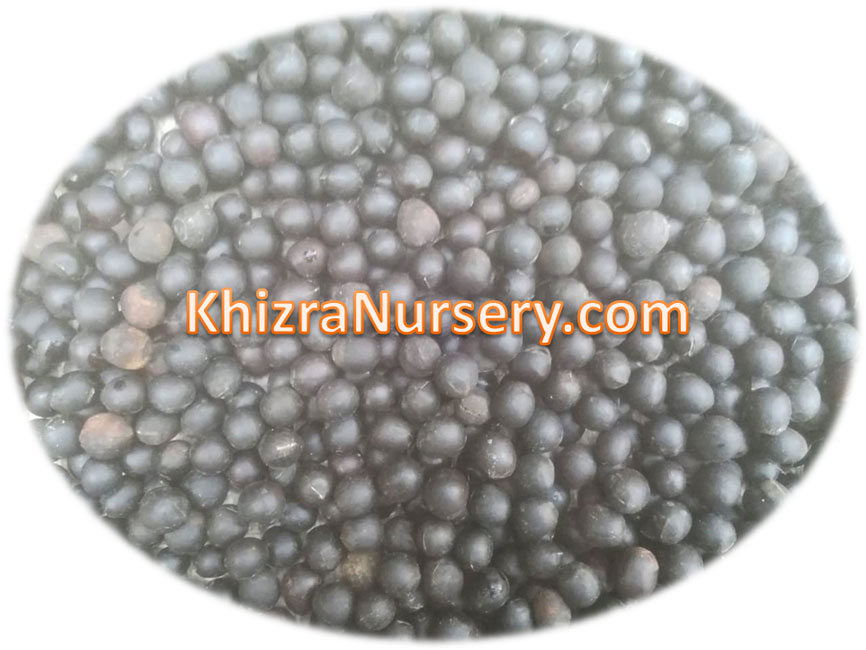
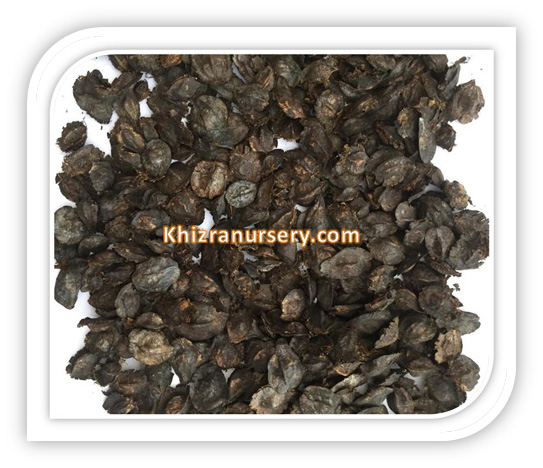



Reviews
There are no reviews yet.