
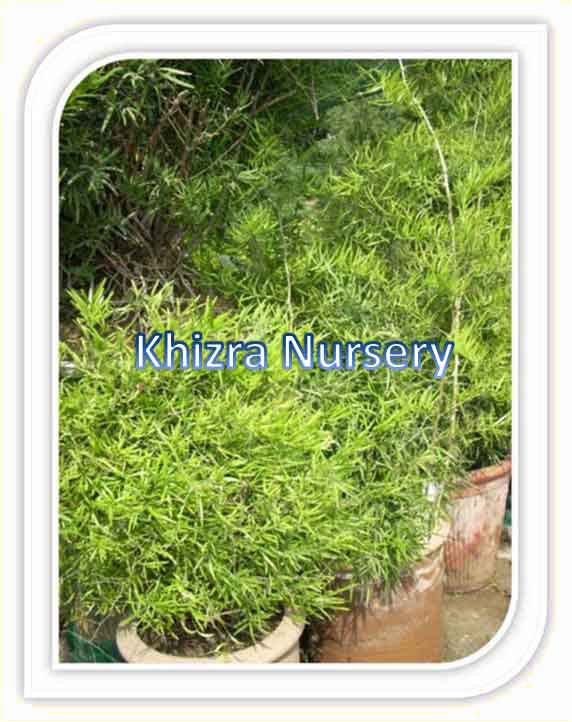
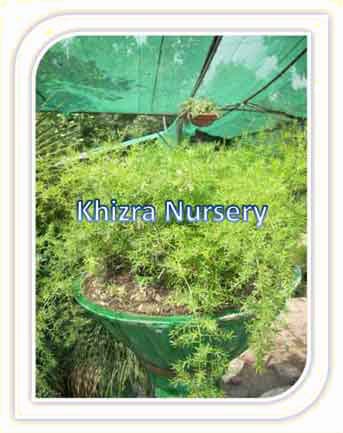
Asparagus falcatus Plants for Sale
Asparagus falcatus, commonly known as Sicklethorn, is an evergreen ornamental perennial valued for its vigorous climbing growth, arching stems, and attractive green foliage. Native from parts of Africa and the Arabian Peninsula through India and Sri Lanka, this adaptable plant is suited to warm climates and can be grown as a climbing or spreading ornamental plant.
Khizra Nursery offers Asparagus falcatus plants for sale for indoor growing, containers, conservatories, sheltered gardens, and ornamental landscaping.
Asparagus falcatus Plant Characteristics
Asparagus falcatus develops long, flexible stems with a bushy and climbing growth habit. The plant can reach approximately 1.5–2.5 meters in height and 1–1.5 meters in spread under suitable growing conditions.
Its fine-textured green foliage gives the plant a graceful appearance, while the climbing stems allow it to spread through nearby vegetation or grow with support.
The plant is evergreen in suitable climates, providing foliage throughout the year. Small flowers may appear on mature plants, followed by red berries.
Sicklethorn for Indoor and Outdoor Growing
Asparagus falcatus can be grown in containers and is particularly useful for bright, filtered-light indoor environments, conservatories, and sheltered outdoor locations. The RHS recommends protecting it from frost and hot direct sun, especially when grown under glass.
Its climbing habit makes it useful where a plant is needed to add vertical greenery or soft foliage to a structure or landscape.
It can be used for:
- Indoor plant collections
- Conservatories and greenhouses
- Large containers
- Sheltered patios
- Climbing displays
- Garden structures
- Ornamental landscapes
- Foliage planting
- Tropical and subtropical gardens
Growing Asparagus falcatus
Asparagus falcatus performs best in partial shade or bright filtered light. Protect it from intense, hot direct sunlight, particularly in containers or under glass.
Plant it in moist but well-drained soil. It can tolerate a range of soil pH conditions, including acidic, neutral, and alkaline soils, provided adequate drainage is maintained.
Water regularly during active growth, while avoiding prolonged waterlogging. During cooler periods, reduce watering as the plant’s growth slows.
Asparagus falcatus Care
Follow these basic care requirements for healthy growth:
- Light: Partial shade to bright filtered light
- Soil: Moist but well-drained
- Water: Regular during active growth
- Drainage: Good drainage is essential
- Growth Habit: Bushy and climbing
- Height: Approximately 1.5–2.5 meters
- Spread: Approximately 1–1.5 meters
- Temperature: Warm conditions preferred
- Frost: Protect from frost
- Support: Provide support as climbing shoots develop
The plant generally requires little pruning, although unwanted or damaged stems can be removed to maintain its shape.
Asparagus falcatus as a Climbing Plant
One of the distinctive features of Asparagus falcatus is its climbing growth habit. As stems develop, they can be supported on suitable structures to encourage upward growth.
Providing a trellis, framework, or other support can help direct the plant and create a more organized display. Without support, the stems can develop into a spreading, bushy form.
Flowers and Berries
Mature Asparagus falcatus plants can produce small flowers followed by red berries. Although these features add ornamental interest, the fruits should not be eaten. The RHS also notes that the fruits are harmful if eaten and that the plant can cause skin allergy in some people, so gloves are recommended when handling it.
Propagation of Asparagus falcatus
Asparagus falcatus can be propagated from seeds or cuttings.
Seed propagation can take longer to produce established plants, while suitable cuttings can provide another method of vegetative propagation.
Young plants should be grown in a well-drained growing medium and protected from excessive moisture while their root systems develop.
Buy Asparagus falcatus Plants
Khizra Nursery supplies Asparagus falcatus plants for sale for indoor collections, containers, conservatories, sheltered gardens, and ornamental landscaping projects.
Its evergreen foliage, climbing habit, and attractive structure make it a useful choice for customers looking for an unusual ornamental Asparagus species for warm and sheltered growing conditions.
Item Details
| Attribute | Details |
|---|---|
| Botanical Name | Asparagus falcatus |
| Common Name | Sicklethorn |
| Family | Asparagaceae |
| Plant Type | Evergreen Perennial / Subshrub |
| Growth Habit | Bushy / Climbing |
| Mature Height | 1.5–2.5 meters |
| Mature Spread | 1–1.5 meters |
| Foliage | Evergreen Green Foliage |
| Light Requirement | Partial Shade / Bright Filtered Light |
| Soil | Moist but Well-Drained |
| Water Requirement | Moderate |
| Suitable Uses | Indoor Growing, Containers, Conservatories, Sheltered Gardens and Landscaping |
Frequently Asked Questions
What is Asparagus falcatus?
Asparagus falcatus is an evergreen climbing perennial in the Asparagaceae family. It is commonly known as Sicklethorn and is valued as an ornamental foliage plant.
Is Asparagus falcatus a grass?
No. Although it is currently placed on the Khizra Nursery website under Perennial Grasses, botanically it is an Asparagus species in the Asparagaceae family, not a true grass.
How tall does Asparagus falcatus grow?
It can reach approximately 1.5–2.5 meters in height and about 1–1.5 meters in spread under suitable conditions.
Does Asparagus falcatus need full sun?
It is better suited to partial shade or bright filtered light. Protection from intense, hot sunlight is recommended, particularly for plants grown under glass.
Can Asparagus falcatus be grown indoors?
Yes. It can be grown indoors in suitable containers where it receives bright filtered light. It is also suitable for conservatories and greenhouses.
Does Asparagus falcatus need support?
Because it has a climbing growth habit, providing a suitable support can help guide the stems upward and create a more attractive display.
How is Asparagus falcatus propagated?
It can be propagated from seed or cuttings.

Reviews
There are no reviews yet.